


What is resistance spot welding?
Resistance spot welding is a robust, tried-and-tested process. Two sheets of metal, electricity, pressure – and the joint is complete. However, the requirements in series production are different today: shorter cycle times, less personnel involvement, more process control.
This is exactly where the SpeedGun® from LEWA Attendorn comes in. It transforms a classic process into a highly dynamic, automated production step. Lightweight, servo-driven, compressed air-free, and fully integrable into existing robot controllers. This reduces your cycle times, minimizes downtime, and increases reproducibility. For manufacturers who want to optimize not just selectively, but strategically.
How automated resistance welding works
Automated spot welding is a clearly structured process—each step designed to balance speed, precision, and stability. The interaction between the robot, control system, and welding gun determines the efficiency of production.
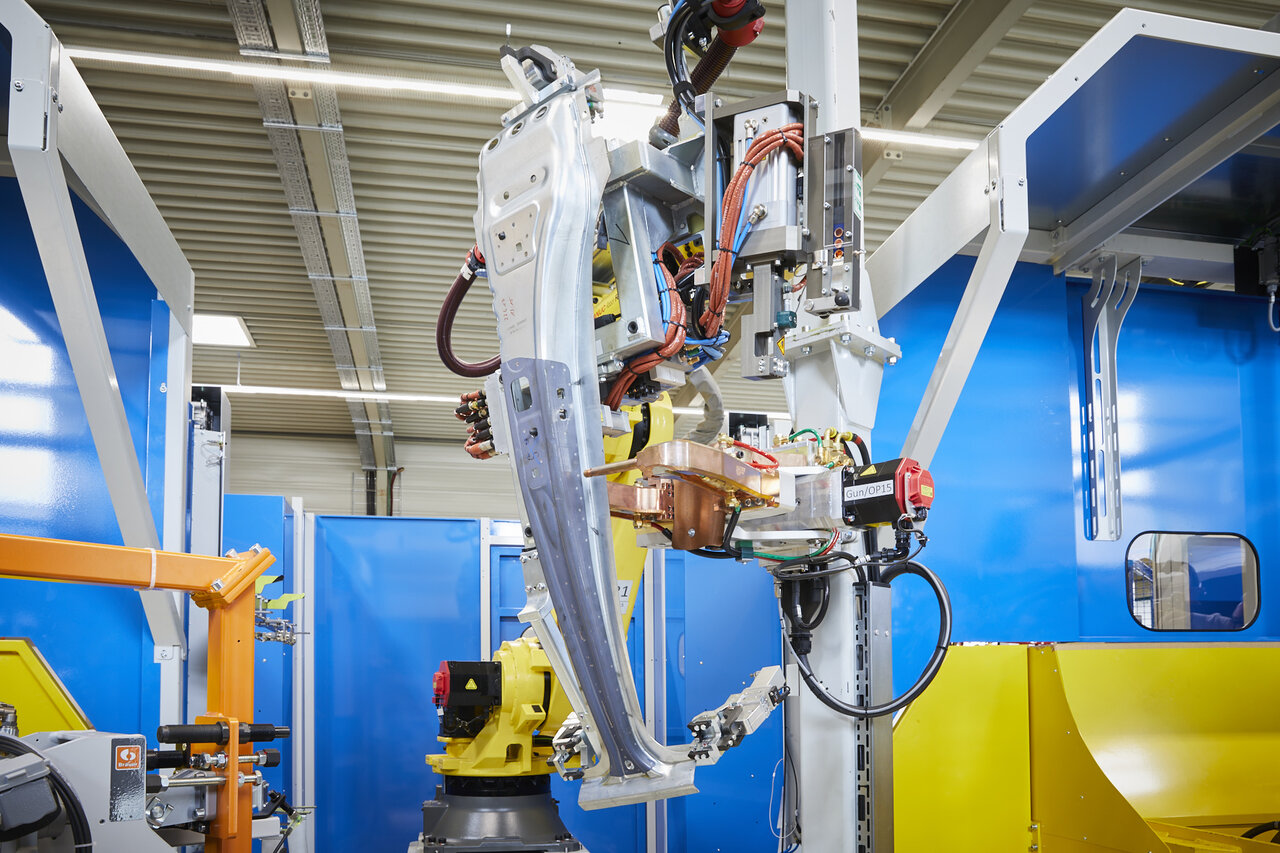
1. Feeding and positioning
The components are automatically supplied and positioned precisely: in fixtures, on workpiece carriers, or directly in the clamping system of the line.
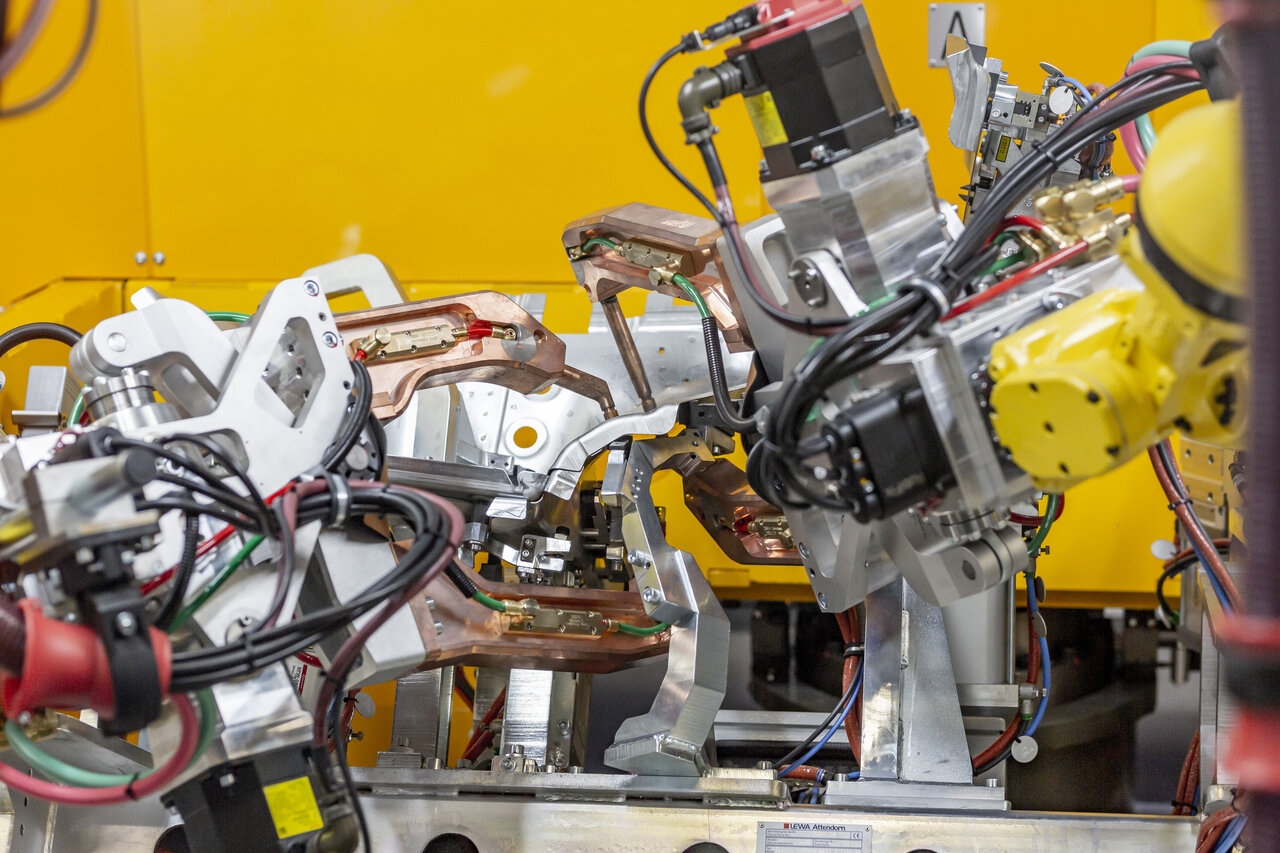
2. Set the welding point
The SpeedGun® moves precisely to the programmed point. Its servo-electric drive closes the tongs quickly and powerfully—without compressed air and without wasting time.
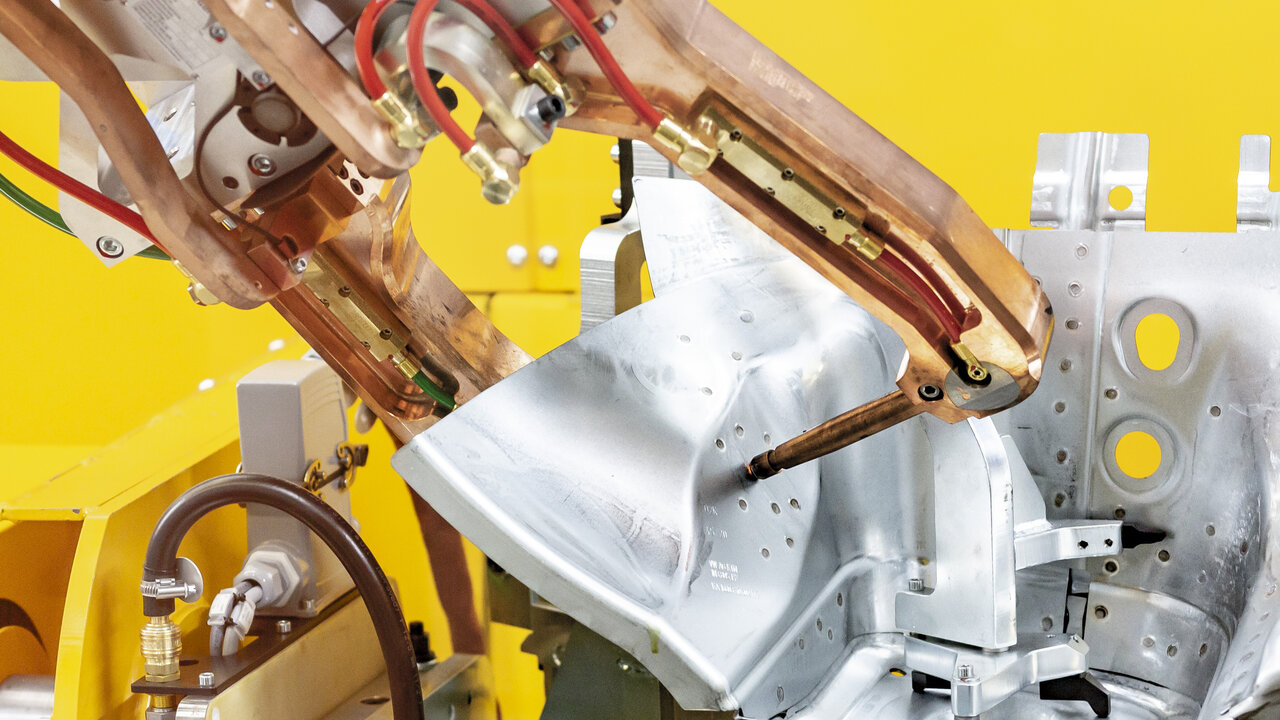
3. Generate current pulse
A precisely measured current flow heats the material at the point of contact. The resistance generates the necessary heat. The components fuse locally: form-fitting and permanent.
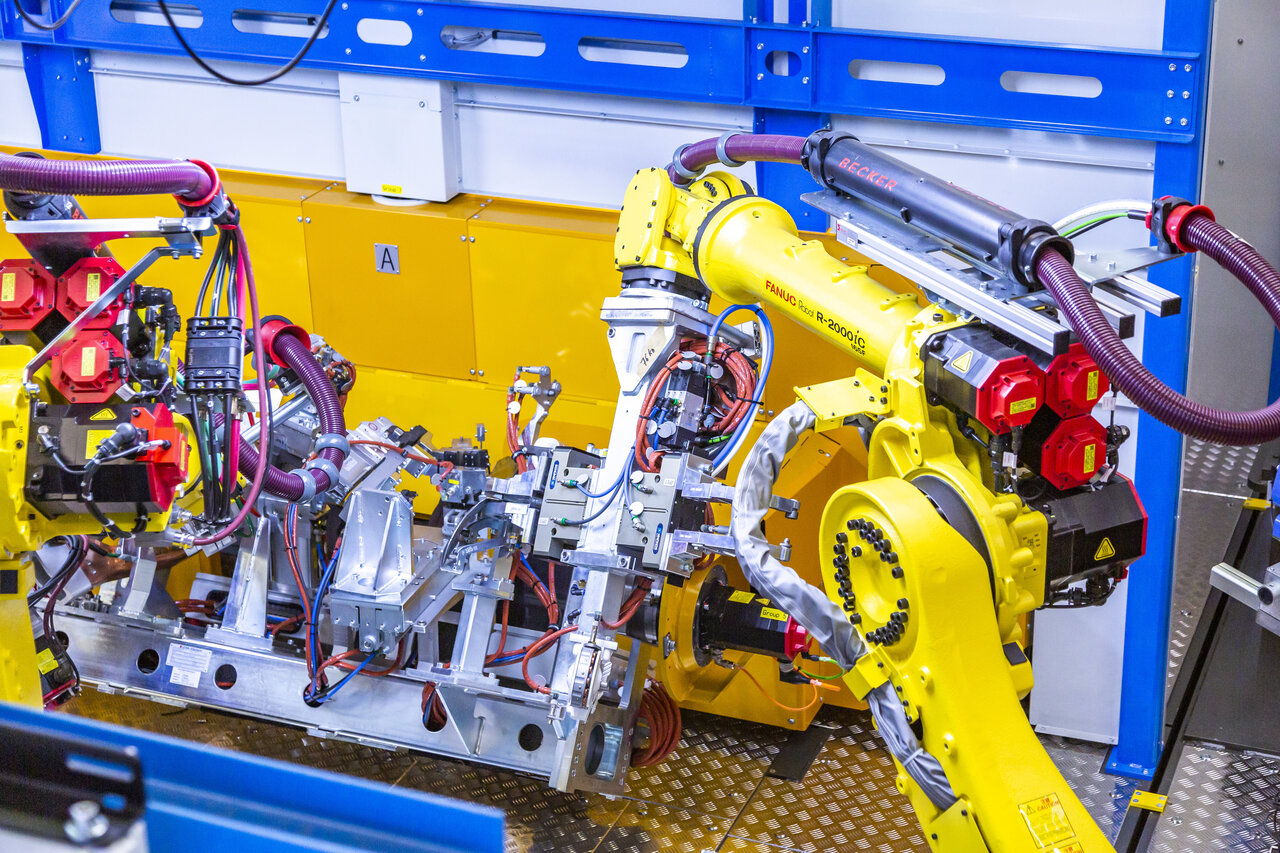
4. Control and further transport
The integrated sensor system monitors force, position, and penetration depth. The part is then automatically transported further or transferred to the next welding position.
SpeedLine® by LEWA Attendorn
Our automated solutions for spot welding
SpeedLine® is our system solution for maximum speed and minimum cycle time in spot welding. You can achieve cycle time savings of up to 40 percent. The modular components are designed for maximum dynamics and maximum process stability in the smallest of spaces. Whether as a single component or an integrated cell, SpeedLine measurably accelerates your entire welding process.
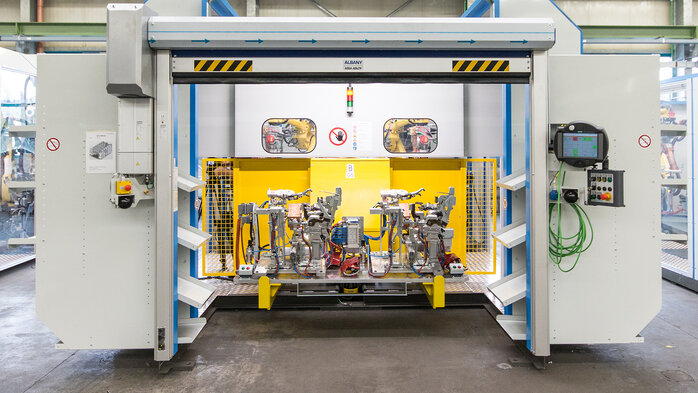
SpeedCell®
Modular welding cell for flexible robotic automation in industrial welding technology.
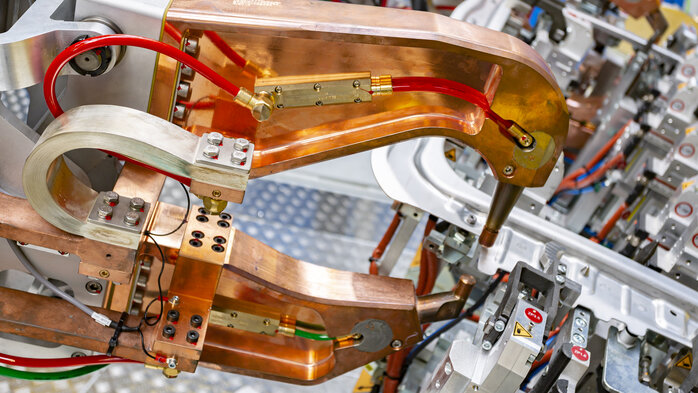
SpeedGun®
High-speed spot welding gun for automated welding processes in industrial manufacturing.
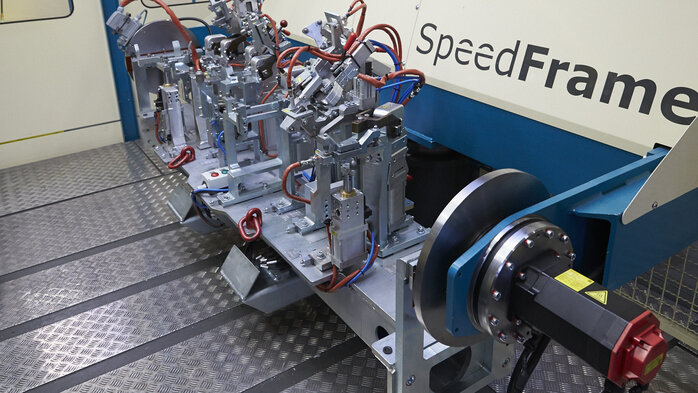
SpeedFrame®
Modular welding rotary table for automated welding processes.
The welding process in practice
Resistance welding for your industry
Automated resistance spot welding is used in a variety of industries. It is used wherever components need to be joined securely, with repeatable accuracy, and economically. The requirements vary, but the technology remains stable and scalable.
What advantages does automated spot welding offer over manual processes?
Automated systems work reproducibly, quickly, and independently of operating personnel. They reduce scrap, ensure consistent quality, and shorten cycle times in series production.
Which components or materials can be spot welded automatically?
Sheet metal components made of steel or aluminum are suitable. Press-hardened steels and coated materials can also be reliably joined using MF technology
Can a spot welding machine be integrated into our existing production?
Yes. Systems such as the SpeedGun are designed to be integrated directly into robot cells, production lines, or modular platforms—without separate control or compressed air infrastructure.
What are the typical cycle times for automated spot welding?
That depends on the process layout. In the SpeedLine, we achieve part feed rates of less than two seconds and, in combination with the SpeedGun, achieve cycle time savings of up to 40 percent.
Contact us now
Would you like to automate your production or further develop an existing line? We can support you in this endeavor: with technical expertise, taking into account your processes, your cycle times, and your economic goals. Whether you need a feasibility study, an initial concept idea, or have a specific inquiry: talk to our experts for welding and milling automation in automotive production. Together, we will develop the right solution for your line.